
The Statue That Almost Wasn't
or Lady Liberté

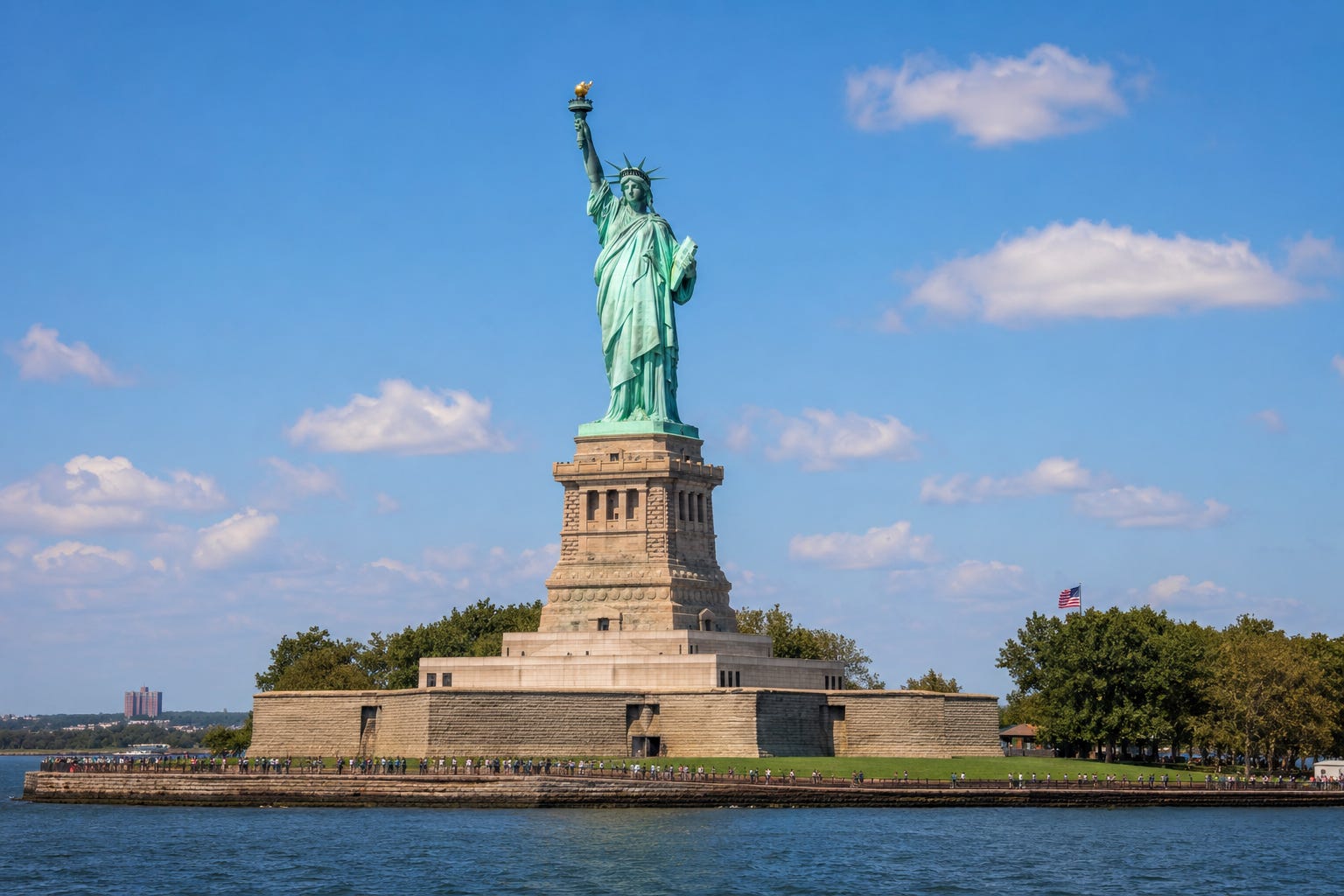
The official story of the Statue of Liberty — its conception, its design, and its assembly in the United States is intriguing. In case you’re not familiar with it, I’ll share some of the highlights here.
Frédéric Auguste Bartholdi, a French sculptor and painter, began designing it in 1870. The actual work took place between 1875 and 1884 in France. Bartholdi sculpted the copper exterior, while the internal metal framework was engineered by Gustave Eiffel. The full statue was built in France in the late 1870s–early 1880s. It was then broken down and shipped to the United States in pieces to be re-assembled on what is now Liberty Island in New York Harbor.
The assembly, much of which was overseen by Bartholodi, was completed in just four months. Final touches included installing the torch and landscaping the island. The fully assembled monument was officially unveiled and dedicated on October 28, 1886.
But the official story isn’t the whole story. Bartholdi’s statue actually was the second one; although, it was almost an exact replica of the first one. The original Statue of Liberty was designed and constructed by Henri Francoise Liberté in the same building Bartholdi used to construct the second one. This is Liberté’s story.
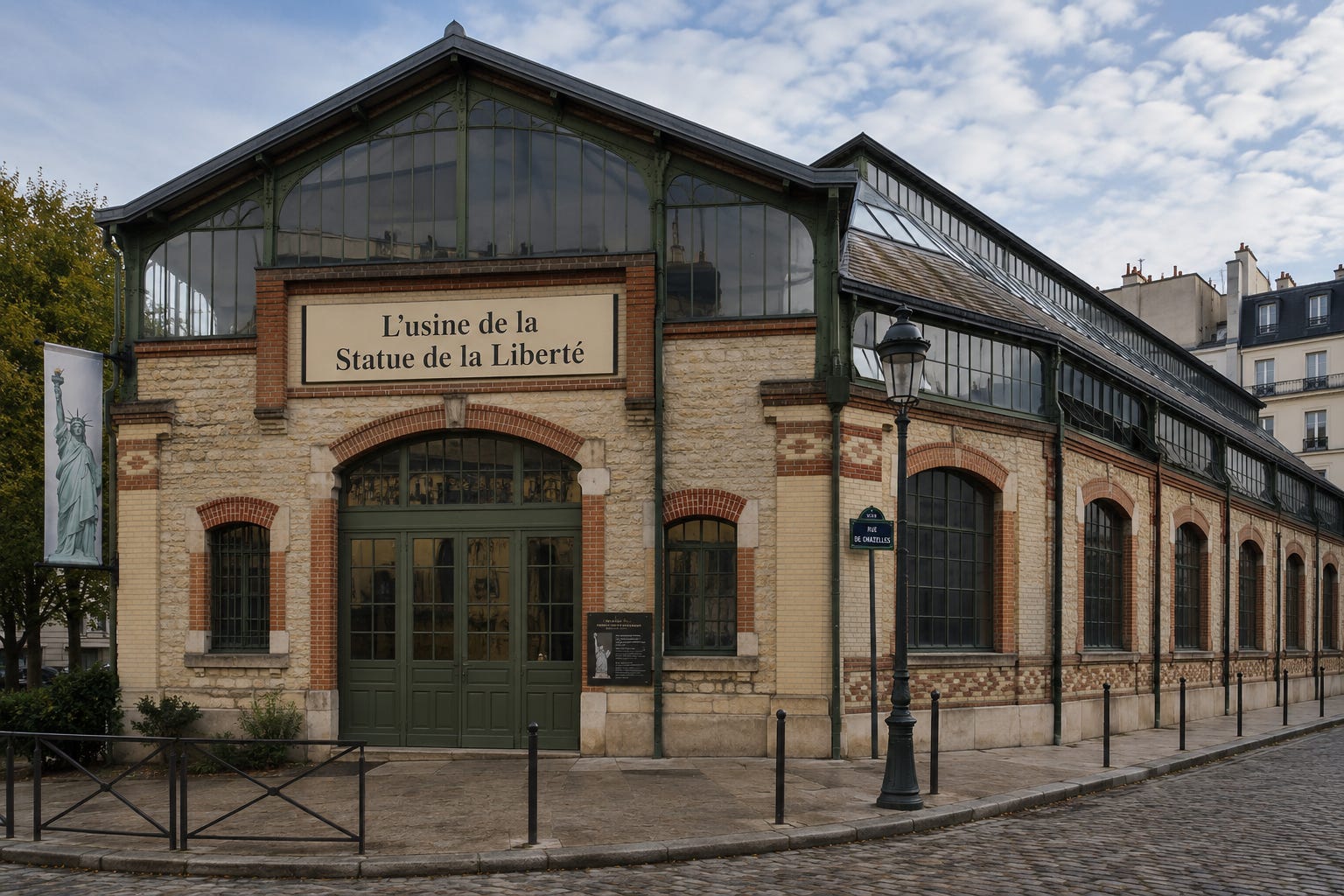
A for Effort
Liberté and Bartholdi met each other in 1870 when Bartholdi was contemplating his design for the statue. When Bartholdi told Liberté his finished piece would require 250,000 pounds of steel and 31 tons of copper, Liberté said, “Mais qu’est-ce que tu racontes ? T’es fou ou quoi ? Tout ce métal sera trop lourd à transporter par-delà l’océan. Ça va faire couler ce fichu bateau!” (Translation: What the hell? Are you, nuts? All that metal will be too heavy to transport across the ocean. It’ll sink the God damned boat!)
Bartholdi scoffed at Liberté’s conservatism and what he took to be Liberté’s lack of faith and imagination. He went back to forging his steel beams and hammering his sheets copper. But Liberté was resolute — and determined to build something lighter and more quickly than Bartholdi could.
Liberté immediately started calling the owners of the 38 newspapers that were published in Paris at the time, all of the bakeries in town, and Elmer. (The Journal de Paris was the only daily. The other 37 were weeklies.) His message to each of them was essentially the same: “Tu dois me donner autant de papier, de farine et de colle que tu peux m’en prêter. Je vais construire une statue de 46 mètres de haut en papier mâché.” (Translation: You have to give me as much paper flour, and glue as you can spare. I’m going to build a statue 46 meters tall out of papier-mâché.)
Most of them ignored Liberté, since he’d contacted them all once before about preempting Gustave Eiffel’s design for the Eiffel Tower by building it out of matchsticks and Elmer’s Glue. But the few that felt sorry for him sent him sufficient quantities of paper, flour, and glue to make enough papier-mâché for the statue.
Liberté quickly realized it would take too long to create a 46-meter base in the shape of the Statue of Liberty, tear the newspaper into strips, soak the strips in a mixture of water, flour, and glue, lay at least three layers of the strips over the form, wait 24 hours for the strips to dry, and repeat the process for the successive layers until the entire base shape was covered. So, he made a full-size mold of the Statue of Liberty. Then he bought a cement mixer. He put the paper, the water, the flour, and the glue into the mixing drum and rotated the drum until the mixture formed a thick slurry. Then he poured the slurry into the form.
As he was waiting for the slurry to dry in the form, Liberté was overheard to say, “Ha! Je vais leur montrer, à ces sceptiques. La statue de Bartholdi pèsera 150 tonnes et devra être transportée sur plusieurs barges. La mienne ne pèsera que 1400 tonnes et pourra être transportée sur un seul bateau. Des imbéciles! Des imbéciles, je vous dis!” (Translation: Ha! I’ll show those doubters. Bartholdi’s statue is going to weigh 150 tons and will have to be shipped on several barges. Mine will weigh just 1,400 tons and can ship on one boat. Fools! Fools, I tell you!)
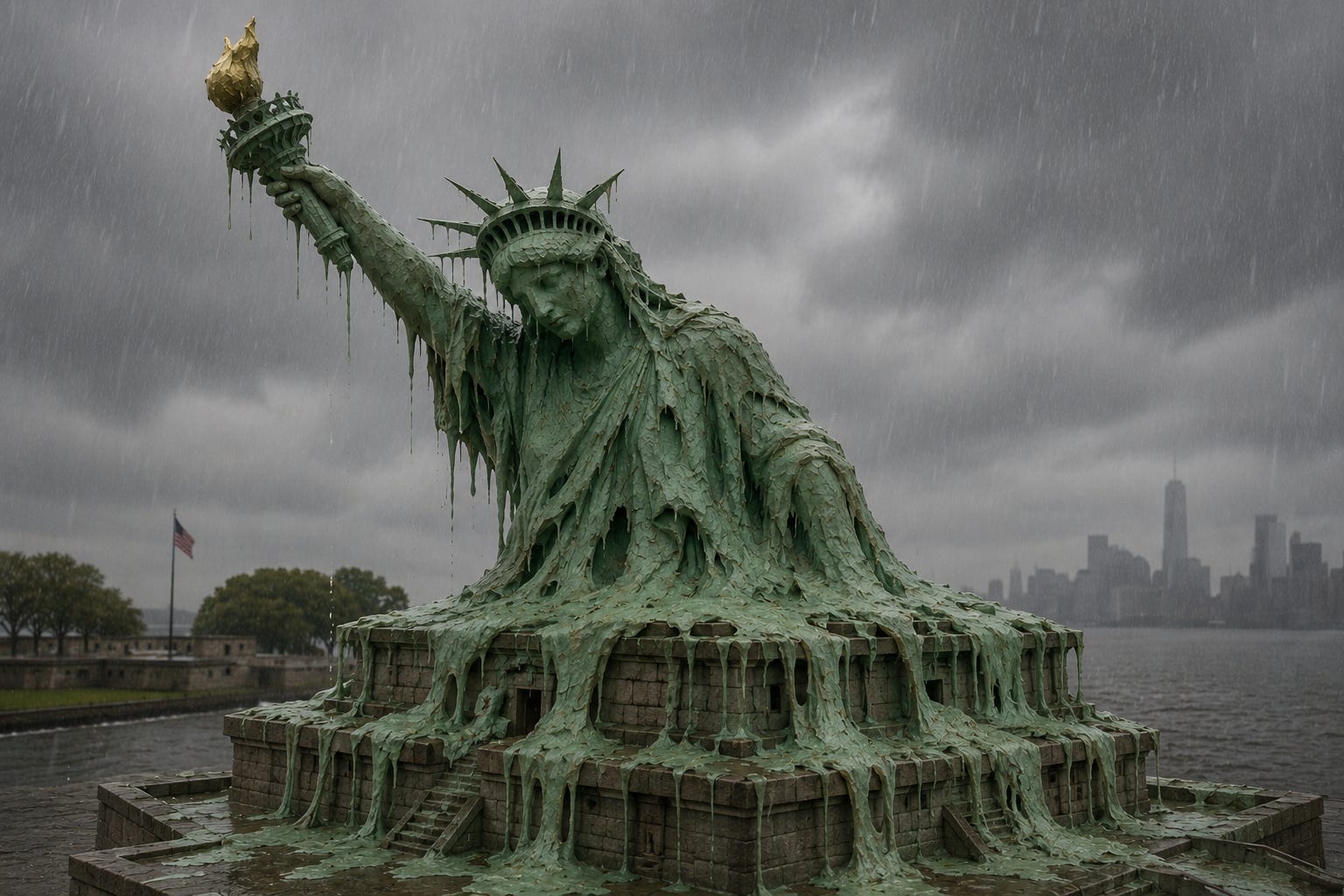
And so it was that Liberté shipped his completed Statue of Liberty to New York on one boat, in one piece, and stood it upright on Liberty Island. Then it rained.
Afterword
After the rains stopped, a crew of maintenance workers from the National Park Service came out with mops, squeegees, and buckets to clean up the mess. Their initial intent was just to push the crap into the harbor with snow shovels. But in 1870, newspaper ink was primarily oil-based, consisting of pigments made from carbon black or soot suspended in a vegetable or walnut oil or, worse, turpentine. Thick and tarry, the pigment provided the color and the oil-based carrier allowed the ink to adhere to the paper without smudging.
That was problematic because New York’s marine and inland waters are designated No Discharge Areas (NDAs, not to be confused with Non-Disclosure Agreements) and protected by the Clean Water Act and Emission Control Areas within 200 miles of the coast, the New York/New Jersey Harbor Contaminant Assessment and Reduction Project (CARP — I didn’t make that up), Green Infrastructure Mandates, and Fishing and Habitat Restrictions. So, the maintenance crew put the soggy slop in the buckets and hauled if off to one of the empty lots where the Mafia dumped bodies.
As for Liberté, on the List of Historic Disasters, he’s right up there with the devastation of Pompeii in 79 CE, the China Floods of 1931, Johnny Manziel’s football career, the Edsel, Evel Knievel’s Snake River Canyon jump, Tiger Wood’s driving record, the Biden presidency, and other catastrophic debacles of yesteryear.
But that’s arguably a bum rap. Sometimes the best examples are bad examples. If you accept that notion, then it’s plausible that without Liberté’s fiasco, Bartholdi may never have known he was on the right track. The United States would never have gotten France’s majestically generous gift. And immigrants entering New York Harbor would have done so without Lady Liberty’s torch to guide them … until the Biden administration, when immigration law was nullified and the borders, ironically enough, were like French-fry baskets.
Liberté’s last words were reputed to have been, “Bon sang! Comment j’étais censé savoir que la colle était soluble dans l’eau?” (Translation: Jesus Christ! How the hell was I supposed to know the glue was water-soluble?)
Nevertheless, here’s to Liberté. May his example shine brightly.