
Hyperinformationalism
or When Everything's Important, Nothing's Important


Do you ever wonder why people write things in bold-face capital letters as if they’re screaming in your face? Me, too. Because I was curious, I did some research. I discovered there was only one reason. So, I made up another one.
The reason I found is that people who write things in bold-face capital letters want you to know what’s important to them. It’s not that they don’t care what’s important to you. They don’t even think about it. They just want you to know this:
THIS IS THE MOST IMPORTANT THING YOU’LL EVER READ! WE DON’T KNOW IF IT’S GOOD OR BAD! BUT IT’S REALLY IMPORTANT! THAT’S WHY IT’S IN BOLD-FACED CAPITAL LETTERS SO YOU’LL KNOW IT’S IMPORTANT! SEE ALL THE EXCLAMATION POINTS? NO?! THEN YOU’RE NOT PAYING ATTENTION, FOR CRYIN’ OUT LOUD! COME ON! WAKE UP! THIS IS REALLY, REALLY IMPORTANT!
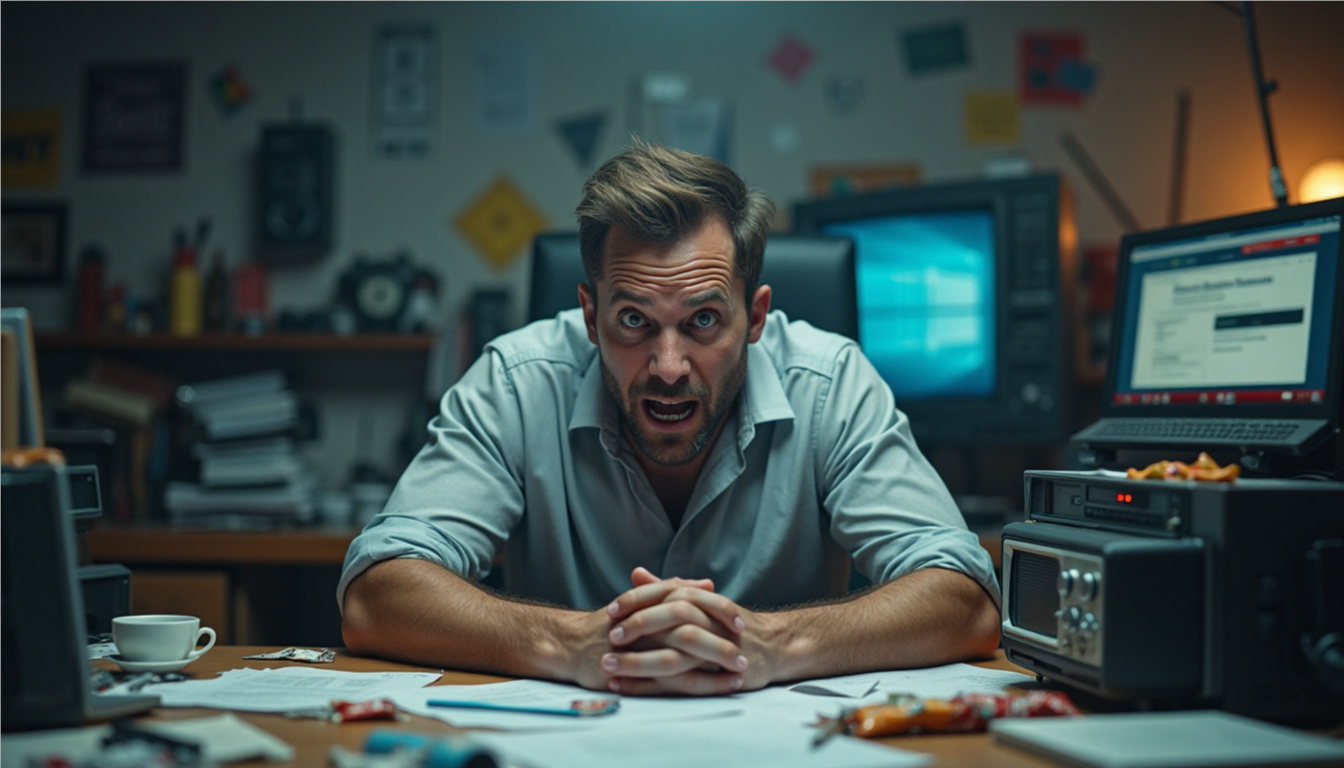
Because I couldn’t find a second reason why people do that shit, the one I made up is a word. Then I made up a phenomenon to go with it. Or maybe I just found the word and the phenomenon by observing and trusting my senses. (Remember empiricism?) The word and the phenomenon are hyperinformationalism. They’re illustrated by the paragraph above. They refer to the fact that we’ve become a race of knee-jerk artists — constantly and reflexively twitching under the relentless onslaught of information with which we’re relentlessly and ubiquitously bombarded. As a result, people write things in bold-face capital letters because they think everything is supposed to be noise. The louder the better. And they confirm this truism: When everything’s important, nothing’s important.
Since I was on a roll (and since there were no adults around to tell me not to), I made up a theory to go along with the word and the phenomenon: We spend so much time inflicting so much information on ourselves from so many electronic sources, we’ve mistaken ourselves for computers. We think we’re the same sort of objective, dispassionate, unemotional accessing mechanisms as those amalgams of chips, processors, transducers, capacitors, and wires. (Why do you think AI is so popular?) But we’re not. And we’re suffering for it.

What’s Going On?
This onslaught is why, even from the youngest age — I grew up at a time in which the dissemination of information were the exclusive provinces of newspapers, radio, and television — I never paid attention to the news. The reason? It’s too new.
We can react to news, but we can’t know what it means. We can’t know its implications or ramifications. Those will only be revealed in time. The news can soothe or panic, but it can’t reveal which response or reaction is warranted. The news can tell us what happened, but it can’t tell us what it means or what will happen next. And knowing what’ll happen next as a result of any news item was always more important to me than what someone else wanted me to know had happened.
What the hell happened?
In the age of hyperinformationalism, have we lost our ability to ponder and to ask critical, analytical, discerning questions? Have we lost time? Or have we lost both?
Just when we attempt to engage in discriminating contemplation, we’re overwhelmed by the next wave of brute information. Awash in that wave with its potential to stimulate beyond reason, we have a choice: Ignore it all until the items of any import roll forth in another wave — or react to all of it instantaneously: Good. Bad. Hopeful. Fearful. Important. Trivial. Scramble and repeat.
A twitching knee has no reason. It reacts on impulse. In the manic, agitated trance of hyperinformationalism, so do we.
The good news is we have access to more information than ever. The bad news is the relentless, ubiquitous bombardment of information short-circuits our ability to process it in any meaningful way. We choose — or are forced into — skimming, superficial engagement over contemplation, incomprehension, and a lack of appropriate or effective responses (if any are warranted or possible).
The upshot is fragmented attention, disrupted focus, shorter memories, ineffective and frustrating attempts at multitasking, shallower processing, analysis paralysis, an impetus to rush to make choices, mental exhaustion, reduced efficiency, increased anxiety, emotional strain, and/or avoidance. I’m fried just from writing that sentence.
And if we don’t opt for avoidance, then, hyperinformationalism will likely compel us to SAY OR WRITE EVERYTHING WE CAN THINK TO SAY OR WRITE, AS LOUDLY AS WE CAN SAY OR WRITE IT, IN EVERY PLACE WE CAN THINK TO SAY OR WRITE IT! And the people with whom we want to be communicating will be left dazed, confused, overwhelmed, twitching like victims of a Mike Tyson haymaker, and probably annoyed. Under those circumstance, annoyance maybe the only sensible and healty response.
Thanks to hyperinformationalism, we’ve forgotten (how) to relax. We’ve forgotten to take our time and communicate substantively and maybe even sparingly. We’ve lost sight of our own expectations and raised them beyond sense and sanity. Drinking from the proverbial fire house doesn’t work. And one man’s deluge is not another man’s absorption. So, why not take it easy?
How Do We Do That?
Make no mistake. This won’t be easy. But we have to buck the trend. We have to turn down the volume. We have to express ourselves so thoughtfully our listeners or readers will be able to give our expressions equal thoughtfulness. We have to make the ways in which we convey information differentiate us. (“Hey! Check it out. This dude’s not yelling.”) We have to give people a chance to absorb the information we’re sharing. We have to make it decipherable and meaningful enough that they want (to learn) more. Don’t sell, instruct. Don’t flood, trickle. Don’t scream. Talk quietly and directly.
No one will ever believe what we think, say, or write is as important as we think it is. Ever. That’s life. But that doesn’t mean people won’t care. They just need to be allowed to care in their own ways, in their own time. If we want to be heard or read, we need to gently and calmly give our listeners and readers the calm and the opportunity to listen and read.
IT’S THE ONLY WAY THEY’LL DECIDE FOR THEMSELVES WHAT’S REALLY, REALLY IMPORTANT!!!
I'm glad you mention shortened memories in this as-always fine yet amusing article, because I am always proud at how much information I absorb everyday, but I don't know where it all goes. (Maybe that's what cellulite is for.) Anyway, I say to my husband, "Hey, I just read that China — or maybe it was Brazil — just did this thing and now everyone's upset." He used to ask follow-up questions, but he knows I have no idea what that thing was or who's upset. I had started to worry about memory issues, but the truth is my mind has become a blender, pulverizing all the info I take in every day into small bits and swirling them together until it's all just a big glob of conflated sound bites from Tuesday. Or was it Wednesday? I'm Jonesing for the ONLY WHAT YOU REALLY NEED TO KNOW — AND ONLY WHAT'S FACTUAL — NEWS SHOW (See how important that is? All CAPS!) that presents the top three stories only via a soft-spoken host nicely accompanied by no more than three bullet points that do not race across the bottom of the screen but rather sit there for the duration of the story to be read and reread, after which Debussy's La Mer plays softly for a few minutes before the credits roll. But then, who am I kidding. Cellulite is a powerful absorbent with which I am richly endowed.
Thank you for restacking, Lee.