
Electric Mosquito Killers
or Do You Know Where Your Bats Are?

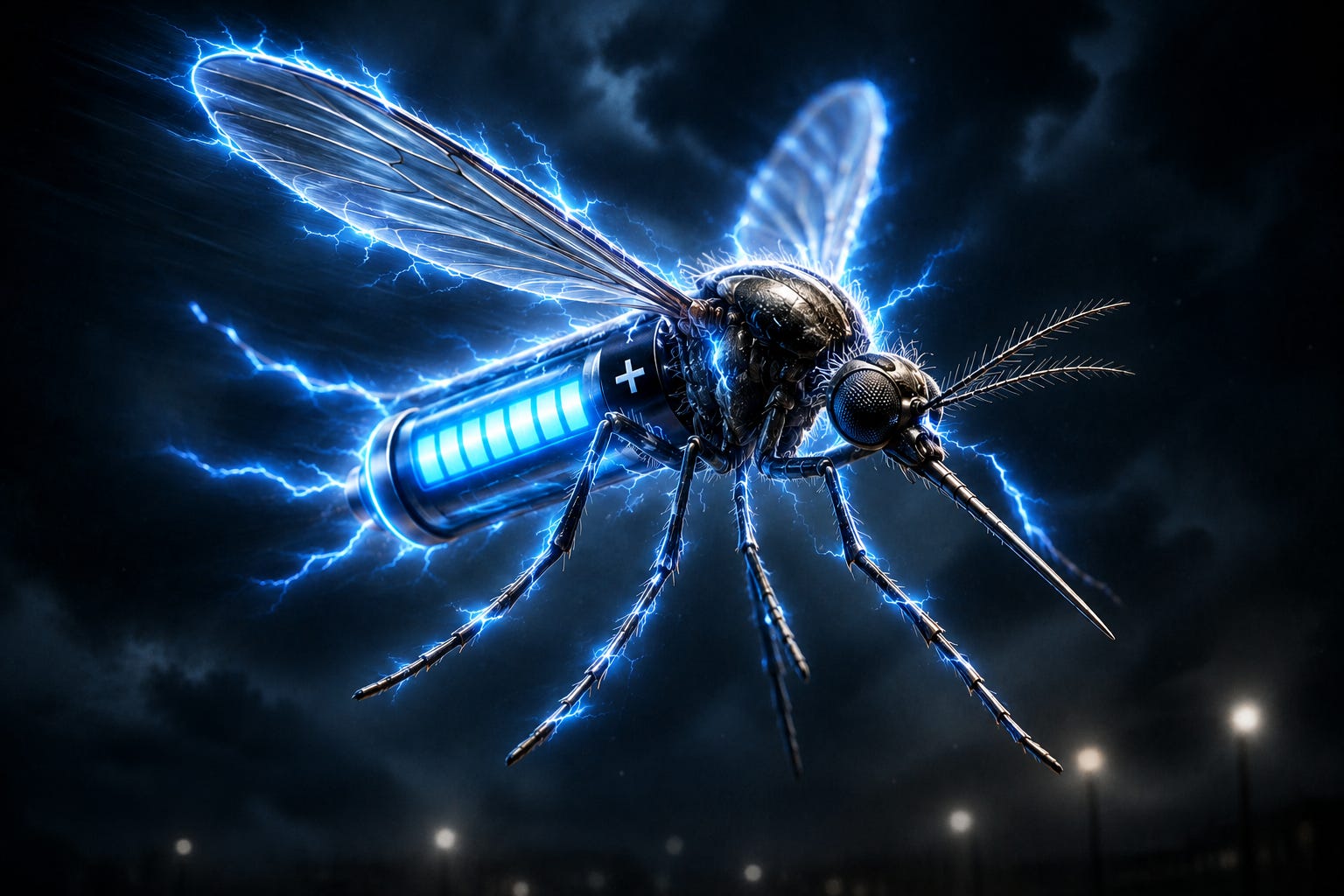
While I never intended to publish a series of posts on the ads that pop up on my iPhone, I couldn’t resist when yet another one showed up between hands during a very close game of Cribbage. This one was promoting Electric Mosquito Killers. The first question that leapt into my mind was, “Why would anyone want to kill electric mosquitos?” The next question was, “Who would be cruel and senseless enough to manufacture and market a product to kill them?”
We really do live in a post-sensitive world.
Aside from the fact that killing electric mosquitoes is just flat-out heartless, it’s also self-defeating if you happen to have infestations of various domestic pests. Spiders, mice, beetles, ants, and other invasive nuisances feed on mosquitoes or their larvae. Having electric mosquitoes around can save you a ton of money on exterminators. You’ll also need a means and a place for disposing of the electrocuted erstwhile mosquito predators. But it’s worth the extra effort.
Not surprisingly, PETA has issued a proclamation in defense of electric mosquitos:
For far too long, the electric mosquito has been the victim of reckless stereotypes, fear-mongering, and outright speciesism. These misunderstood creatures aren’t villains of the natural world—they are among its most dedicated conservationists.
While critics obsess over the occasional harmless shock to an unsuspecting human, they conveniently ignore the electric mosquito’s invaluable ecological service. Every day, these tireless aerial custodians courageously defend our environment by delivering fatal jolts to spiders, mice, beetles, ants, centipedes, and countless other invasive opportunists that would otherwise infest our homes and places of business. Their commitment to self-defense should be applauded, not condemned.
Unlike certain mammals we could mention, electric mosquitoes never clear-cut forests, pave wetlands, or invent leaf blowers. They ask only for a few drops of nourishment and the occasional opportunity to fry would-be predators with a terminal (no pun intended) burst of renewable bioelectricity.
Scientific observers noted electric mosquitoes demonstrate remarkable powers of dissuasion. Spiders, mice, beetles, ants, centipedes, and other invasive species have been known to reconsider their dietary choices and their domiciles after seeing a single electric mosquito.
We therefore urge lawmakers to reject discriminatory bug-zapper legislation and instead recognize electric mosquitoes as Purveyors of Pest Purgation. Rather than swatting these remarkable insects, citizens should thank them for reminding bothersome members of the animal kingdom that even the smallest members of the ecosystem deserve dignity, respect, fear, and a modest electrical perimeter.
PETA further recommends the following common-sense measures:
Establish Shock-Free Sanctuaries in gardens and parks where electric mosquitoes can recharge in peace.
Require ethics training for spiders, mice, beetles, ants, centipedes, and other invasive species on the importance of respect and informed consent before attempting to consume other living creatures.
Encourage homeowners to post signs reading: “This Property Proudly Protects Electric Mosquitoes.”
Observe National Electric Mosquito Appreciation Week by refraining from hostile swatting and offering appreciative applause from a safe distance.
Every creature has a purpose. Some pollinate flowers. Some disperse seeds. And some, through the miracle of evolution, administer lethal voltage to overconfident predators.
The electric mosquito isn’t nature’s menace. It’s nature’s Tiny Terminator.
One of the most remarkable things about the electric mosquito is that it’s occasioned the one time, ever, that I’ve actually agreed with PETA.

Going to Bat for Bats
Among the more benign creatures that feed on mosquitoes are bats. Given my affinity for Batman, I tend to have a soft spot in my heart for them. So, to protect the bats around our home — even as we’re protecting the electric mosquitoes around our home — my wife and I have put a number of bat houses in trees around our yard. We’ve also taken care to keep them supplied with beetles, mealworms, midges, flying ants, moths, mayflies, and other things that are parts of their regular diets. In addition, we’ve become members of Bat World Sanctuary, with the intention of implementing more fully their dietary guidelines for feeding adult bats.
Some of our neighbors have registered complaints with the City of Middletown’s Health Department, with all of which we’ve taken steps to comply. For instance:
Bat houses have open bottoms, so guano (bat feces) and urine tends to pile up underneath them. We’ve agreed not put any of our bat houses over their patios, their barbecue grills, or the places where they park their cars.
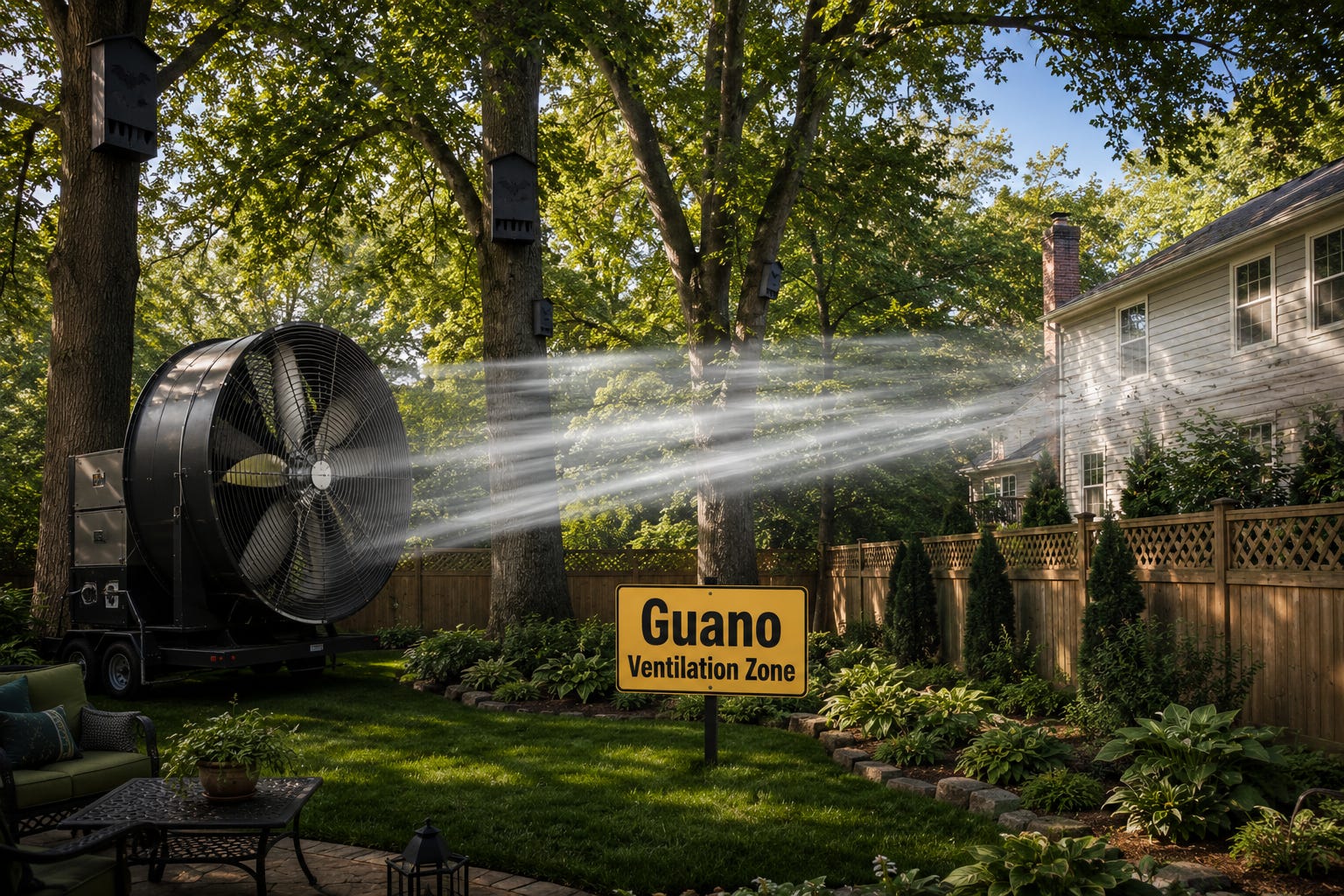
Dried guano can harbor Histoplasma capsulatum fungus, which can lead to a respiratory illness called histoplasmosis if the spores become airborne and are inhaled. We’ve agreed to take down the fans we erected to blow the spores in the direction of our neighbors’ yards.
Bats can carry rabies, and rabid baby bats that sometimes fall from their bat houses could pose a risk to children or pets. We’ve agreed to put safety nets under our bat houses to keep rabid baby bats from hitting the ground. We’ve also put signs around our property that say, WARNING: ELECTRIC MOSQUITOES ON THE PREMISES and volunteered to teach the neighborhood kids how to read.
Empty or partially occupied bat houses can attract wasps, hornets, mud daubers, spiders, birds, squirrels, chipmunks, or mice to move in. We’ve agreed to keep our bat houses properly occupied and to evict any squatters as soon as they arrive.
While good fences make good neighbors, that’s not always true for bat houses, apparently, as we’ve been learning the hard way.
Anything’s Possible
For all I know there may be a market for electric mosquito killers. I tend to adopt a live-and-let-live policy, which is why we take care to keep our bats away from the electric mosquitoes. But to each his own, I guess.
For every Mother Theresa, there’s a Ted Bundy out there. For every Dirty Harry, there’s a Scorpio out there. And for every nature lover, there’s an electric mosquito killer out there. It’s the natural order of things or the food chain or something.
Speaking of the food chain, an entomological note: Electric mosquitoes aren’t the same as fireflies, aka lightning bugs. In fact fireflies aren’t flies or bugs. They’re beetles. The light they produce is the result of a chemical reaction of luciferin and the enzyme luciferase in specialized organs on their abdomens. While luciferin and luciferase are non-toxic, electric mosquitoes, consumed in sufficient quantities, can be lethal to humans; although, we don’t recommend eating either of them.
PETA’s proclamation notwithstanding, be careful out there, kids.