
Art: The Final Frontier
or Don't Brush It Off

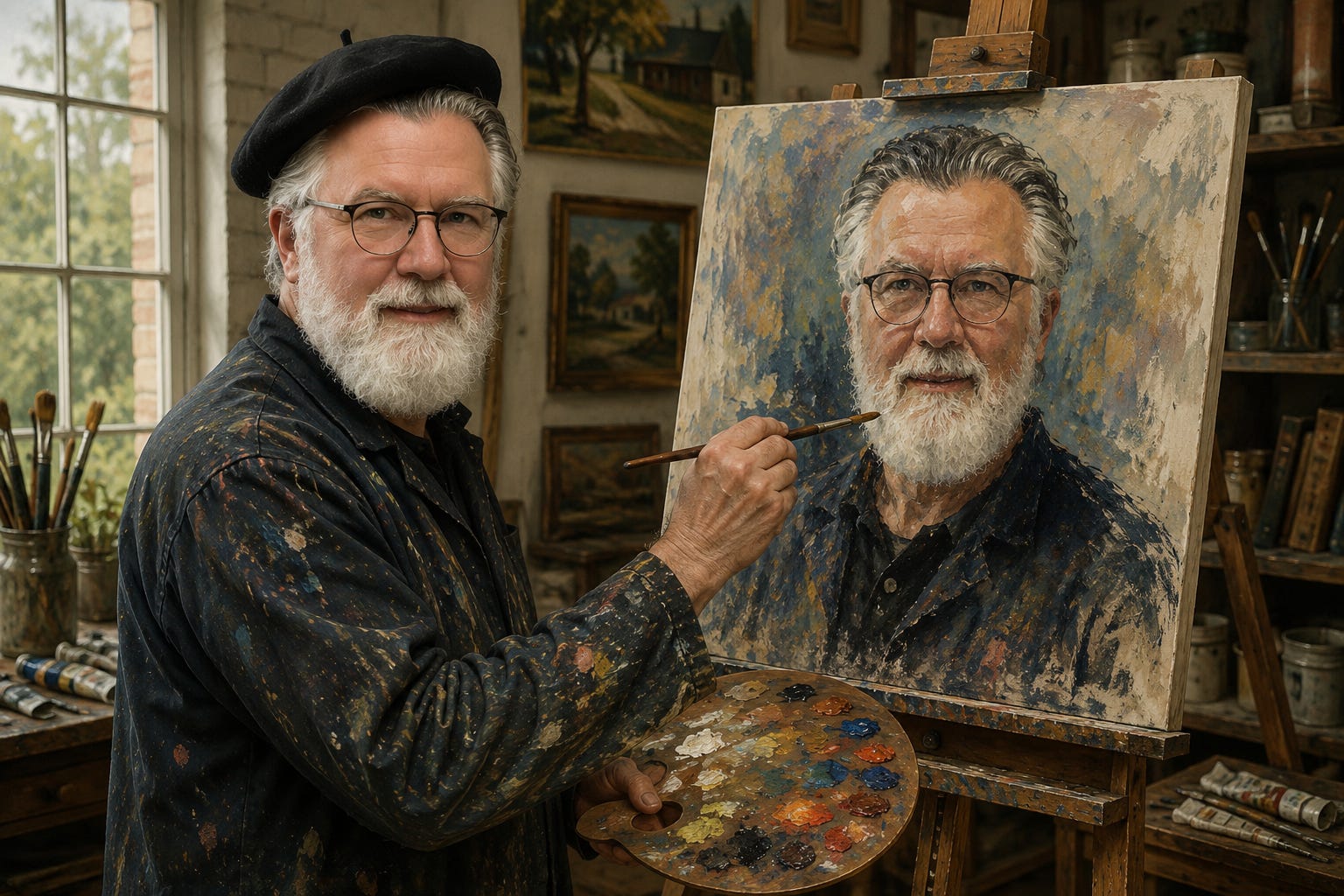
If you’re anything like me, it periodically occurs to you — not infrequently with some degree of alarm — there’s something you’re missing out on doing. For instance, the other morning it frighteningly dawned on me that I’m one of the very few people I know who isn’t creating art.
My wife, Anne, is a brilliant, award-winning painter. I’ll never be in her league. I don’t aspire to be. I flunked every art course I was ever required to take. I simply want to take brush in hand and make a modest contribution to the milieu.
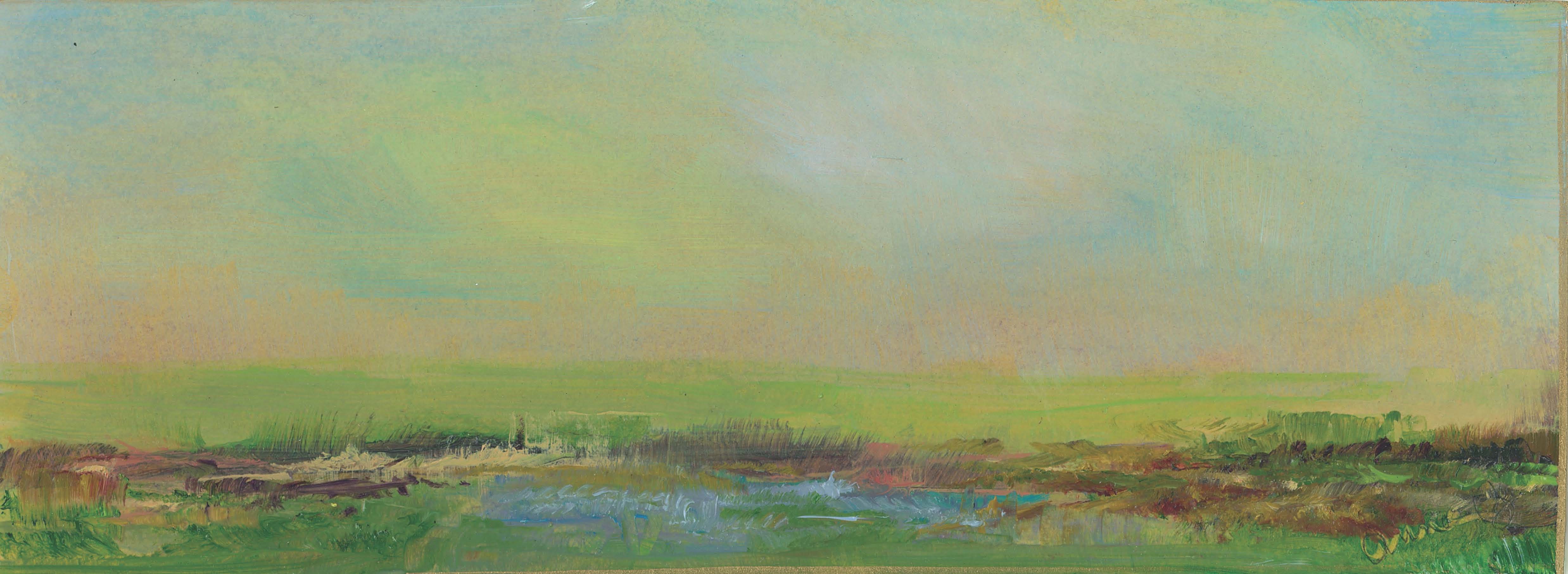
Because, if I want to be taken with any degree of seriousness at all, I have to have various periods — like Picasso’s Blue, Rose, African-Influenced/Primitivism, Cubism, Neoclassicism, Surrealism, and Vague Periods — I decided to start with work in three distinct periods. I also thought I could boost my credibility (if not my legitimacy), if I worked with different kinds of paint in each period.
My first two periods were abstract.
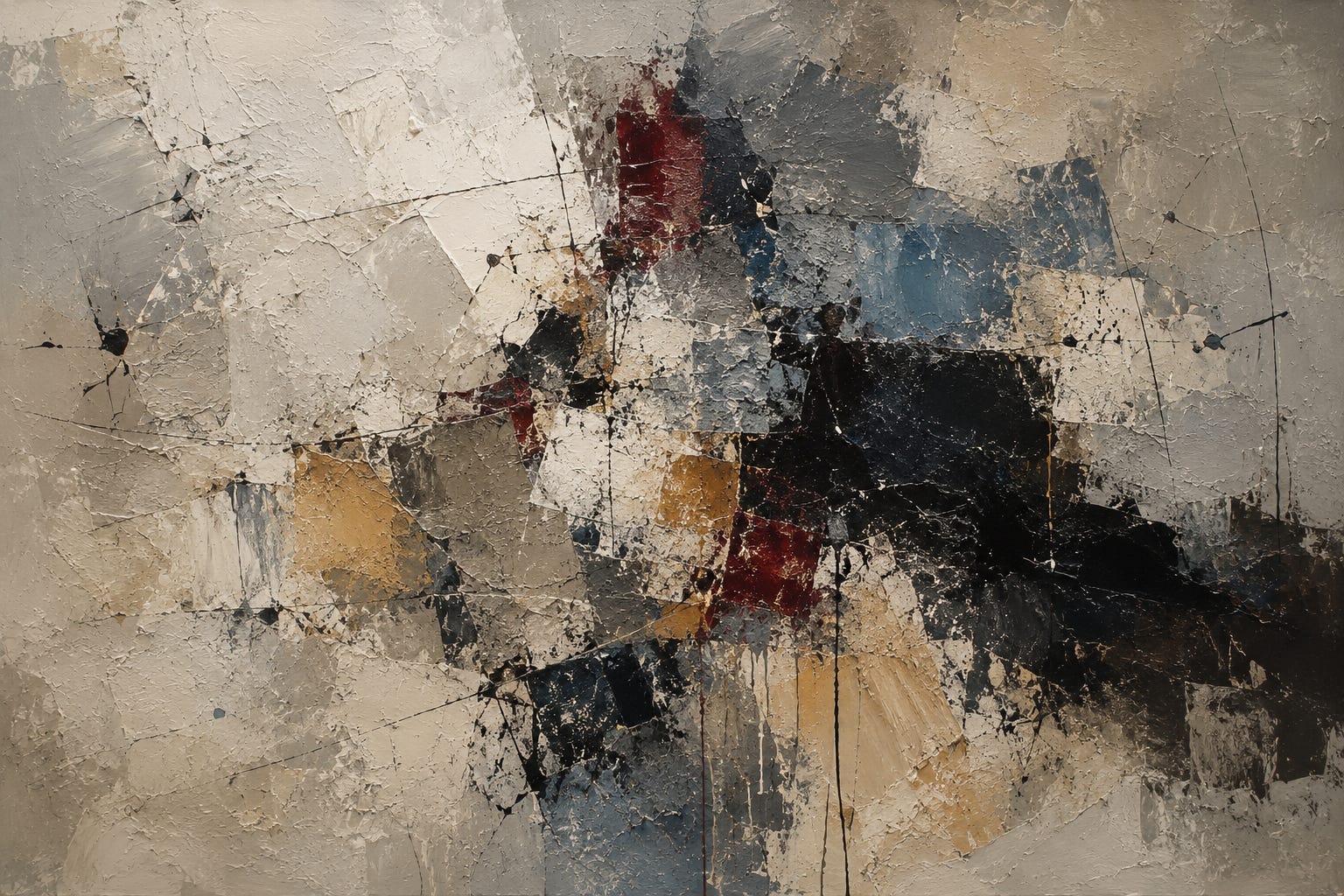
My Tactile Period
I believed the first period of my work should have physical depth as well as visual depth. And I didn’t want to work with anything as pedestrian as a painting knife.
So, I mixed a bunch of acrylic paints together, mostly earth tones with a little blue for contrasts and accents. Once they’d hardened to a point at which they were still malleably liquid, I extruded them through an OXO Good Grips Heavy Duty Garlic Press onto a canvas. I set the canvas on a DV-FD Vibration Table for five minutes to cause the still-liquified paint to blend and settle but to retain a light relief. Then I let it dry for a few days before unveiling it at a local gallery.
Here’s a photo of it:
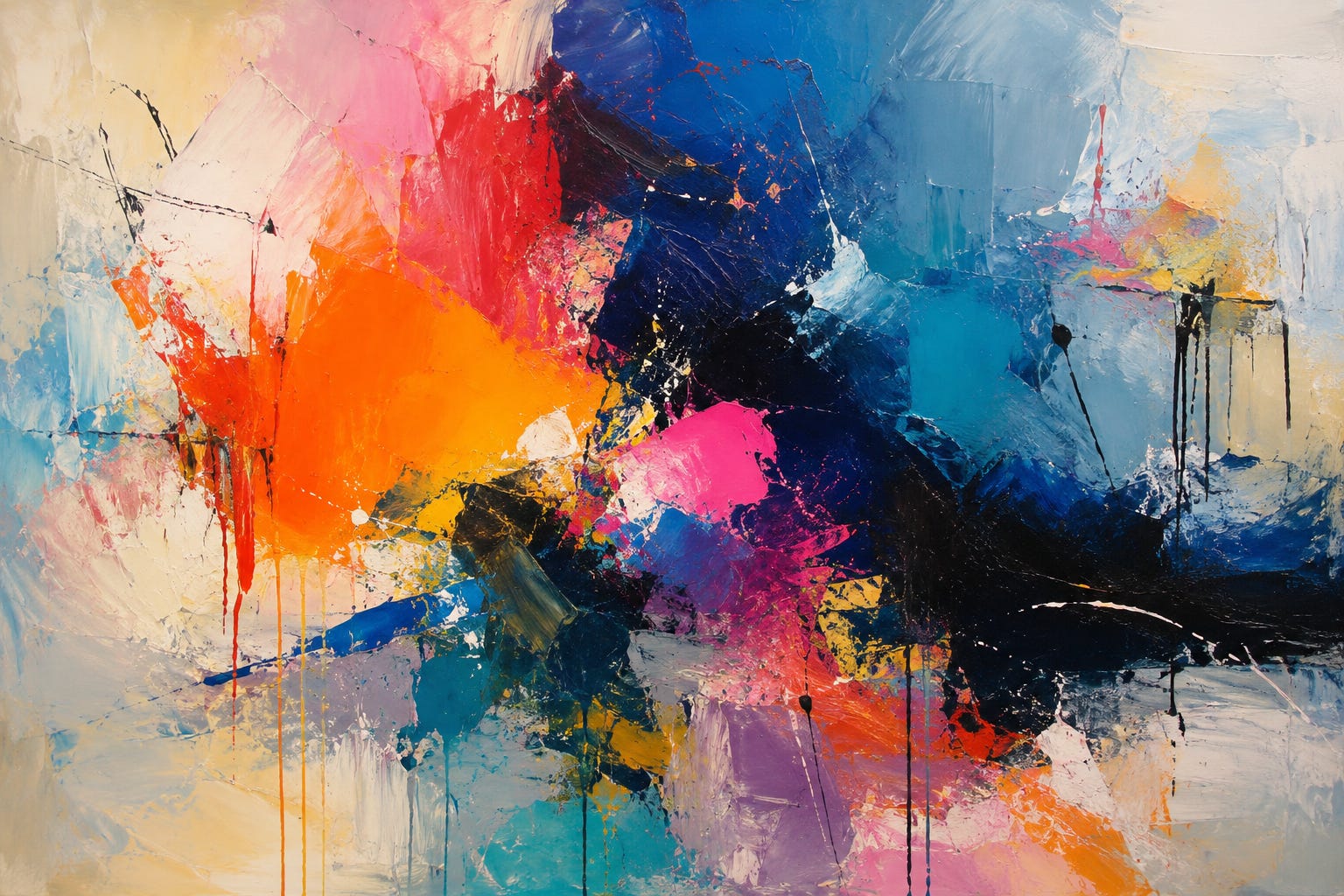
My Watercolor Period
Because I wanted the second period of my work to be as experimental as it is experiential, I undertook a method I took to be novel, if not singular. I started with a 4’x8’ sheet of 3/16” plexiglass, sanded the surface, and treated it with watercolor ground to ensure the paint would adhere.
Then I got an entire solid watercolor paint set, a Zyliss Professional cheese grater, and a FlexAll Funnel. As I grated each color into the funnel, I used its flexible tube outlet to direct each color were I wanted it to be on the plexiglass.
Finally, I set the plexiglass on a three-degree angle and got a Hoselink 8-Pattern Flow Control Sprayer. Using the mist setting on the sprayer, I shot intermittent bursts of water at the paint on the plexiglass surface until the colors started to run slightly. Then I set the plexiglass flat again, let the surface dry thoroughly, and sprayed it with Schmincke Watercolor Spray Fixative to seal and protect the finished piece.
Here’s a photo of that painting.
My Blues Period
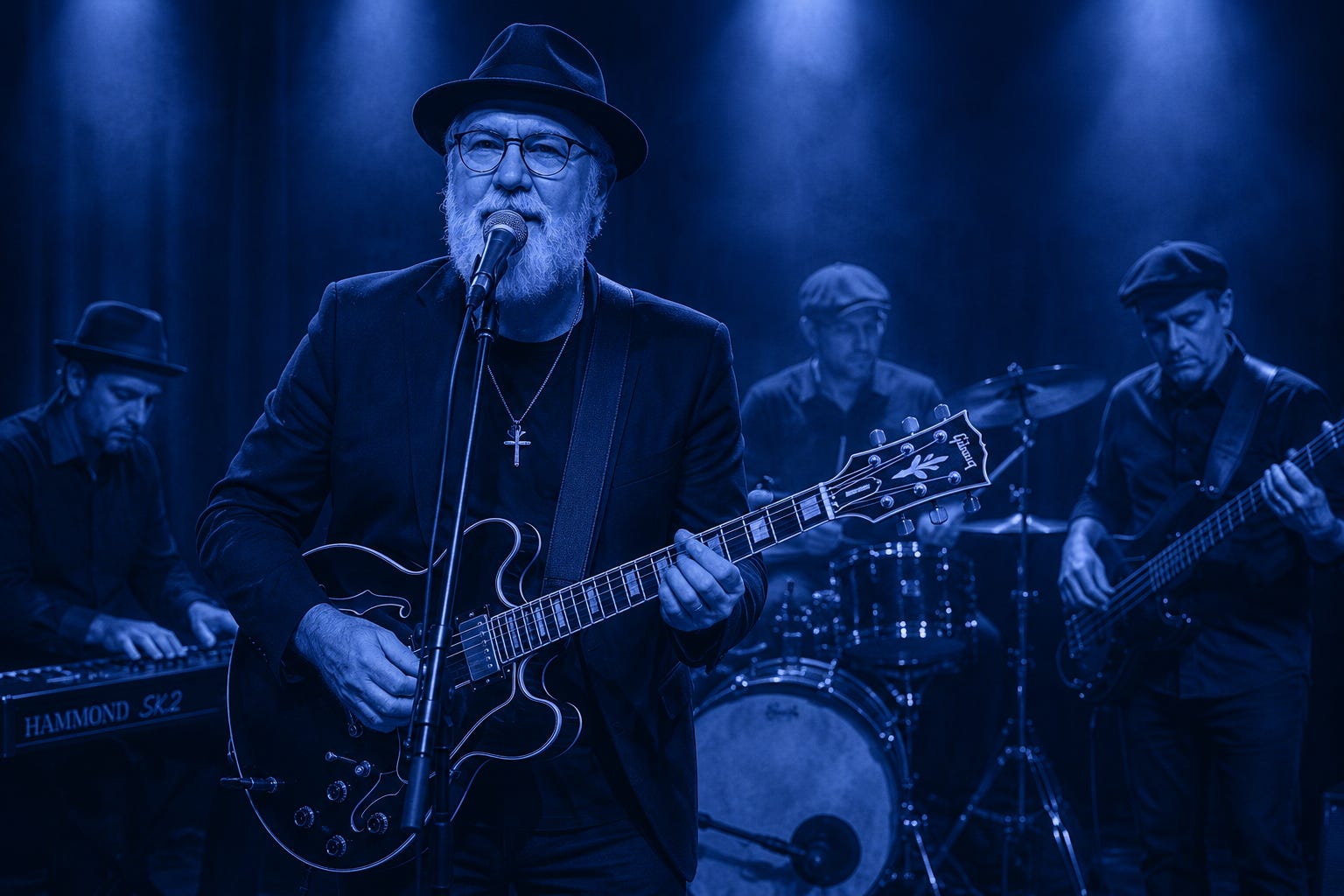
It seemed to me I could combine my love for music and my new-found love for painting into one artistic period if I did it right. So, putting my own spin on a self-portrait, I bought a 100 percent Egyptian cotton, 1500 thread count, king size bed sheet. I washed it and dried it on the highest settings to prevent its shrinking later. (I didn’t care if the sheet shrank. I just didn’t want to look any smaller.) Then I treated the sheet with a textile medium to prevent stiffening, cracking, and peeling — and to optimize adhesion.
Once I’d stretched the sheet over a large piece of cardboard from the box my new refrigerator came in, I painted the piece in normal colors; although, I muted them in consideration of what I did next: Once the paint had set, I soaked the sheet for 30 minutes in a tub full of blue rinse. Then I took it out and hung it on a clothesline, making sure it wasn’t in direct sunlight to prevent fading.
At risk of being immodest, I have to say it came out better than I thought it might.
Here’s a photo of that piece.
My Realism Period
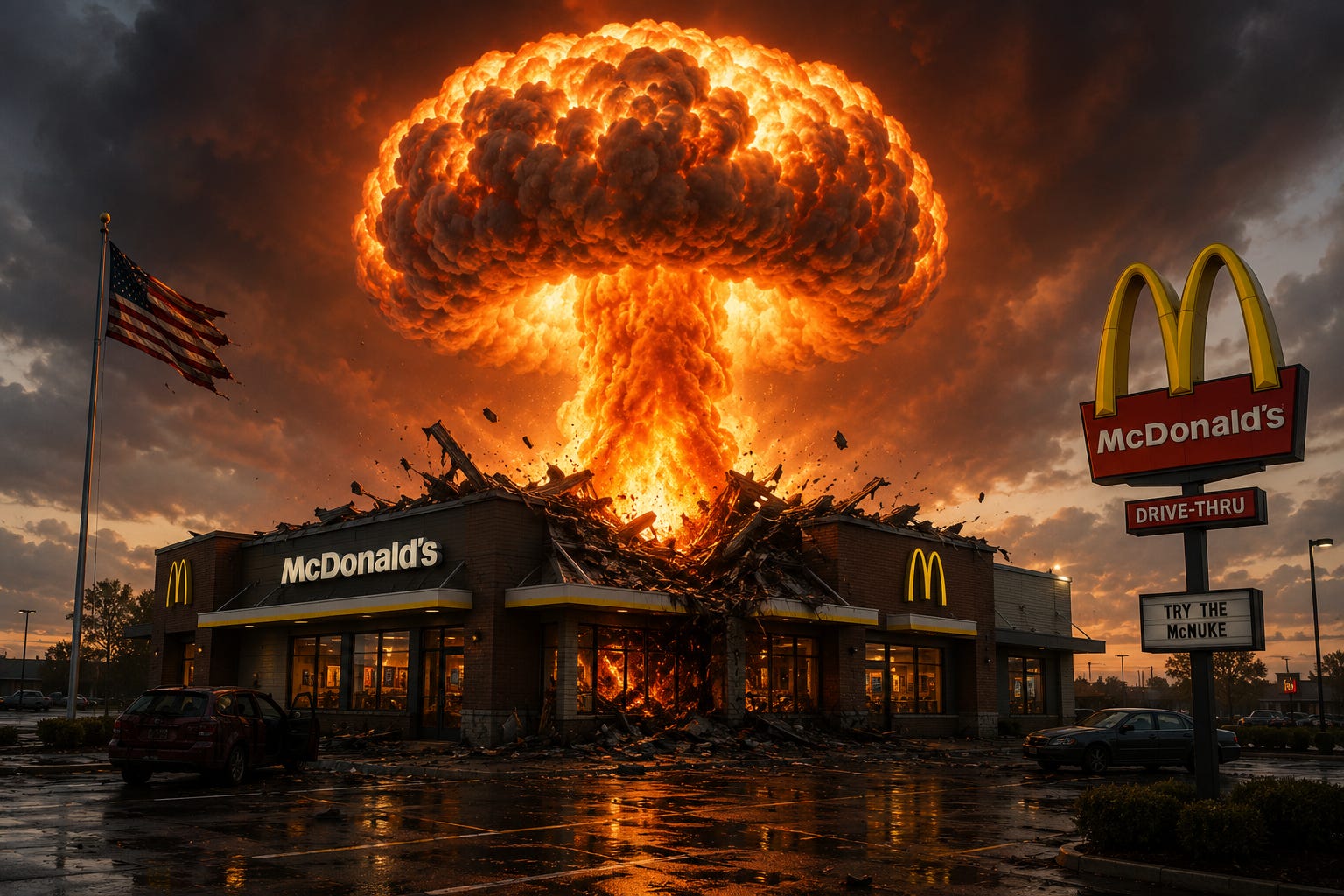
Having completed my first three periods, I turned to realism and opted to work in oil this time. I was less inclined to be experimental but just as committed to being experiential. My aim was to produce a piece that was an accurate, detailed, and unembellished depiction of a real-world concern. And I wanted to render it without idealizing, without having it be subject to any romantic exaggeration, and to keep it as free from artificial conventions as I could.
Once I’d decided on the subject matter, I went to a local fast-food establishment to do some research to ensure the finished work had a high degree of visual truthfulness, as well as believable proportions, natural light and shadow, realistic colors, and precise details, while staying on this side of photorealism; that is to say, I wanted to avoid the potential sterility of a photographic image and to ensure the painting was an authentic, interpretive observation, rather than a kind of mechanical copying. I wasn’t at the fast-food joint long before I’d learned everything I needed to learn.
Here’s a photo of the inaugural work from my realism period.
What’s Next?
The good news about taking my various periods consecutively is that I got them out of the way and established my credibility and my legitimately quickly. The bad news about taking my various periods consecutively is that I got them out of the way and established my credibility and my legitimately quickly. As a result, I’ve created my own tough act to follow.
At this point — and though I’ve been advised against it — I’m leaning toward undertaking my Spray Period. Because this period may be a little more technological (as opposed to technical) than the others, I’ve already acquired a Fuji Spray Q5 Platinum T70 1 Qt. HVLP Paint Sprayer. But I’ve yet to determine the technique by which to apply it and the substrate on which to apply it.
But since my Tactile, Watercolor, Blues, and Realism Periods have put me in such demand, I’ll have time to contemplate my technique while I’m traveling the world meeting all the people who want to meet me.
It may look easy, but it’s tough at the top.
Art really is the final frontier.